
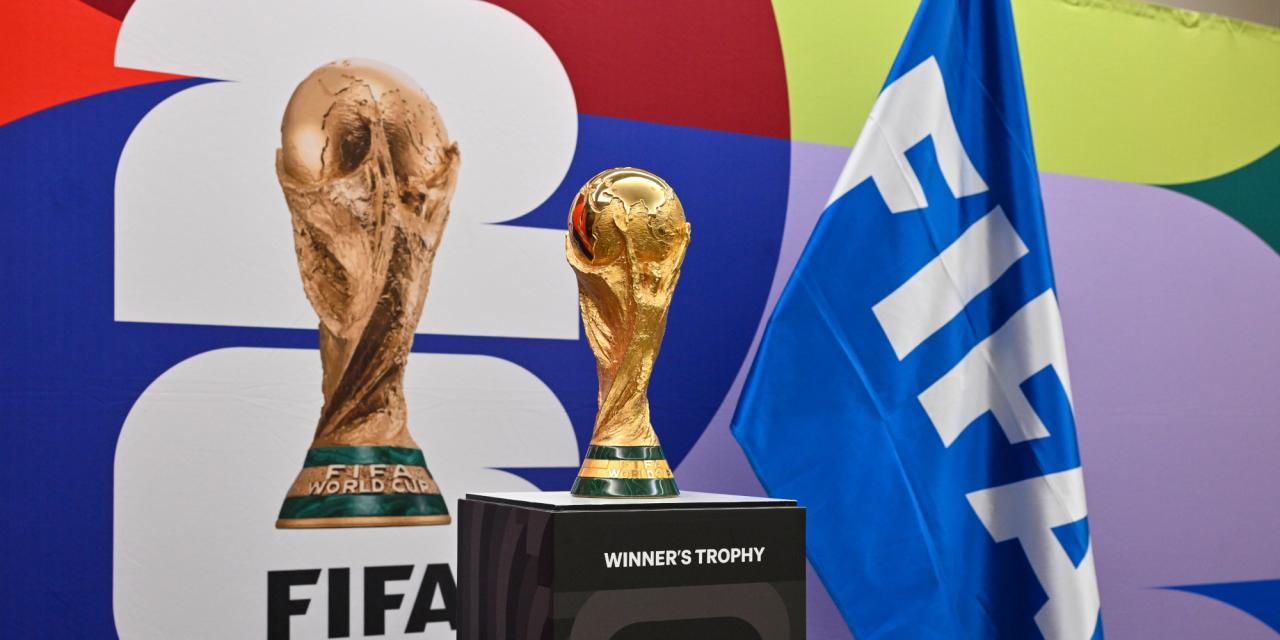
The 2026 FIFA World Cup, co-hosted across the United States, Canada, and Mexico, has shattered records not just on the pitch but in the advertising world. As the tournament progresses, it has become increasingly clear that the cost of commercial spots during matches has skyrocketed to unprecedented levels, creating a new economic landscape for broadcasters and brands alike. This surge in advertising costs is fueled by a combination of factors, from the innovative and controversial “hydration breaks” to the immense global viewership that the World Cup commands. While the event is predicted to inject a staggering $10.5 billion into the global ad market, brands are finding that the traditional methods of securing attention are more expensive and fragmented than ever before .
The Controversial Catalyst: Hydration Breaks
The most significant driver of this year’s advertising cost explosion is a new rule implemented by FIFA: mandatory hydration breaks during matches . This rule, introduced to protect player health in the hot North American summer conditions, mandates a three-minute pause in the middle of each half at the 22-minute and 67-minute marks . While officially a health measure, these breaks have quickly been recognized as a commercial goldmine for broadcasters. The regulations allow commercials to be shown during these pauses, creating a new and highly lucrative inventory of ad time . This has effectively turned a point of contention among players, coaches, and fans into an unprecedented revenue stream for networks .
This new revenue stream is so immense that its scale is redefining the economics of sports broadcasting. To put this into perspective, consider the new advertising inventory generated by the mandated hydration breaks. Each 3-minute break provides approximately 4 minutes and 20 seconds of available advertising time, which translates into eight 30-second slots per match . With 104 matches in this expanded tournament, this creates a staggering 832 new advertising spots . The scale of this new inventory is so substantial that it is reshaping the entire value proposition of World Cup broadcasting rights. This event illustrates the enormous financial pressures and opportunities within the modern sports media landscape, where every moment of a broadcast is increasingly commodified.
Fox Sports Leads the Charge in the US Market
Fox Sports, the American English-language broadcaster, is at the epicenter of this advertising boom . Having secured the broadcast rights for the tournament for an estimated $400 to $500 million, Fox is well on its way to recouping and potentially far exceeding that investment through advertising revenue alone . The network has aggressively capitalized on the hydration breaks, commanding premium prices for the coveted 30-second spots. Industry analysis indicates that the average cost for a 30-second commercial during the World Cup on Fox ranges between $200,000 and $300,000 . This price point, however, can vary dramatically depending on the match.
The price of admission for advertisers seeking to reach American football fans during this tournament has reached new heights. The fees for a 30-second spot can increase by more than double during games involving the U.S. men’s national team or during the high-stakes knockout stages and the final, where a single spot can cost upwards of $750,000 . Given this pricing structure, Fox is projected to generate between $250 million and an astonishing $600 million from the hydration break advertisements alone . This suggests that the new advertising inventory could cover the entire cost of the broadcasting rights, a financial milestone that is unprecedented for a World Cup broadcast in the United States.
The Advertising Attention Index: A Silver Lining for Marketers
Despite the exorbitant costs, there is evidence that World Cup commercials are delivering exceptional value for brands. According to data from iSpot, an advertising measurement firm, brands advertising on the Fox networks are achieving significantly higher “attention” scores from viewers . The average attention index for World Cup advertisers on Fox is 121, meaning they perform 21% higher than the average for all television advertising . This high level of engagement is a testament to the captive audience that live sports, particularly an event as monumental as the World Cup, commands. Viewers are not only watching the games but are also paying close attention to the commercials that punctuate them, which is a highly valuable metric for brand advertisers.
Global Advertising Surge and Media Inflation
The advertising frenzy surrounding the 2026 World Cup is not isolated to the United States. The global demand for premium ad space has driven a surge in media inflation worldwide . The World Federation of Advertisers has projected that global media inflation will climb to 4.4% in 2026, a significant jump from the 4% recorded in the previous year . This inflationary pressure is a direct result of the intense competition for advertising spots, both on traditional linear television and across various digital and out-of-home platforms . The tournament is expected to generate a $10.5 billion uplift in the global ad market, underscoring its profound economic impact .
The impact is particularly acute in markets passionate about football. For instance, linear television inflation in the United Kingdom is projected to skyrocket from 2.3% to 11.3% during the quarter in which the tournament takes place . This dramatic increase highlights how the World Cup can distort media pricing, with advertisers willing to pay a premium to be associated with the event. This phenomenon is not limited to the UK; other European nations such as Germany, the Netherlands, and Sweden are also bracing for substantial increases as their national teams’ qualification spurs further advertiser demand . This demonstrates the global scale of the World Cup’s commercial influence, affecting both host and non-host nations.
A Tale of Two Strategies: Fox vs. Telemundo
Within the US market itself, there is a fascinating divergence in advertising strategy between the two main broadcasters: Fox and Telemundo . While Fox has fully embraced the commercial potential of the hydration breaks, airing full-screen advertisements and even labeling the breaks as “sponsored by” specific brands, Telemundo, the Spanish-language broadcaster, has adopted a more traditional approach. The network has decided not to air commercials during the hydration breaks, instead opting to keep the broadcast focused on the stadium atmosphere and post-game commentary in the studio . This strategic choice highlights a difference in philosophy and target audience, with Telemundo prioritizing the integrity of the viewing experience for its viewers, which may be a more effective long-term strategy for brand loyalty and viewership retention.
This divergence in approach extends to their overall financial performance. Interestingly, despite the more aggressive commercial approach from Fox, Telemundo is actually seeing slightly higher national TV ad spending so far, at $202.3 million compared to Fox’s $181.6 million . This suggests that the Spanish-language audience is a highly desirable demographic for many advertisers, and Telemundo’s decision to avoid ad overload may be a calculated move to maintain viewer satisfaction and attract a loyal audience that marketers are eager to reach. However, it’s worth noting that Fox’s attention index is higher at 121 compared to Telemundo’s 104, indicating that while Fox may have more ads, they are more effective at holding viewer attention .
Successful Brands and Ad Strategies
Several major brands are seeing strong returns on their significant investments in World Cup advertising, particularly on Fox. Home Depot, for example, has spent approximately $4.8 million on national TV spots and has achieved an attention score that is 36% higher than the average . Nike, a major player in sports apparel, has spent $6.6 million and achieved a 35% higher attention score . Other brands such as Bank of America, Google, and Wells Fargo are also among the top performers, demonstrating that the World Cup is a powerful platform for a diverse range of industries, including financial services and technology . The effectiveness of these campaigns suggests that the World Cup’s appeal extends far beyond traditional sports-related products.
FIFA’s Position and Future Implications
While broadcasters like Fox are reaping massive financial rewards from the hydration breaks, FIFA has been careful to distance itself from the commercial implications. FIFA President Gianni Infantino has asserted that the hydration breaks were introduced purely for player safety and are not a commercial decision . He also clarified that FIFA does not directly benefit from the additional advertising revenue generated by these breaks, as the broadcast rights deals were already negotiated before the rule change was implemented . This distinction is important for FIFA’s public image, as it seeks to maintain the perception that the sport’s integrity is the primary concern.
However, the long-term implications are clear. The financial success of the 2026 World Cup’s hydration breaks has set a precedent. Experts believe that this model is likely to become a permanent feature of future FIFA tournaments, including the 2030 World Cup in Morocco, Spain, and Portugal, which will also be held in a hot summer climate . The $250 million+ revenue generated for Fox from these breaks has dramatically increased the value of World Cup broadcasting rights. When the time comes to renegotiate, FIFA will be able to point to this new revenue stream as a justification for higher licensing fees, thereby indirectly benefiting from this controversial practice in the long run .
The Shift to Multiplatform Engagement
Despite the massive spending on traditional TV ads, the World Cup’s commercial impact is becoming increasingly fragmented . WARC Media has noted that while audiences remain huge, the direct contribution to ad growth is weakening compared to previous tournaments . This is partly due to the decline of linear TV audiences and the rise of multiplatform consumption. Advertisers are no longer competing for attention on a single screen but must engage fans across a diverse array of touchpoints, including social media, podcasts, creator content, and streaming platforms, which offer alternative avenues for engagement without the burden of bidding for broadcast rights .
The shift in audience consumption patterns is a critical factor. At the Qatar 2022 World Cup, the tournament reached 2.87 billion people, yet linear reach fell 11.9% compared to 2018 . This decline is being offset by increased digital viewing, particularly in markets like China and India. As a result, the 2026 World Cup is seeing attention shift to the conversations happening around games . TikTok, a FIFA partner, is showcasing behind-the-scenes footage, YouTube is streaming live matches from media partners, and platforms like Netflix are exploring video podcasts to monetize the tournament’s buzz, demonstrating the evolution of sports media consumption . This trend indicates that the future of World Cup advertising will be more about creating integrated, multi-platform campaigns than simply buying expensive TV spots.
Late-Night Kick-Offs and Category Opportunities
Another factor reshaping the advertising landscape is the timing of matches. For many key markets in Europe, the Middle East, and Asia, a significant portion of the World Cup matches will air outside of peak viewing hours . In Western Europe, less than half (42.3%) of the games will take place during daytime hours, and in China, that figure drops to just over a third (34.6%) . This timing constraint is limiting the opportunities for traditional live broadcast advertising in those regions. However, it also creates unique opportunities for non-rights holders to capitalize on curated content, such as highlights and commentary through podcasts and social media . This late-night schedule also presents opportunities for brands in restricted categories, such as quick-service food delivery in the UK, where ads for high-fat, sugar, and salt products are subject to restrictions before 9 p.m. .
A Detailed Analysis of the Ad Cost Surge
To understand the full magnitude of the advertising cost explosion at the 2026 World Cup, it is helpful to examine the contributing factors in detail, each of which has played a significant role in driving prices to their current levels.
A. The Introduction of Hydration Breaks
The most significant and direct factor is the creation of a vast new inventory of ad slots through the mandatory hydration breaks. These breaks add up to approximately 7 hours, 30 minutes, and 40 seconds of additional commercial time across the entire tournament . This new inventory has provided broadcasters with over 800 new 30-second spots to sell, fundamentally altering the supply and demand equation for World Cup advertising . This dramatic increase in available slots, especially in prime-time matchups, has given networks the leverage to command premium prices.
B. The High-Value Prime-Time US Audience
For the first time in over 20 years, the World Cup is being hosted in North America, allowing matches to be broadcast during prime-time viewing hours in the United States . This is a stark contrast to previous tournaments held in Europe or Asia, where games often aired in the early morning or late-night hours for American audiences. The prime-time slot has made the advertising inventory significantly more valuable to US-based brands, leading to the sky-high rates that Fox is able to charge. The combination of a massive, captive audience and the convenience of prime-time viewing has created a perfect storm for ad revenue .
C. Intense Brand Competition and the “Battle of the Brands”
The World Cup remains a premier marketing battleground for major global brands. Nike and Adidas, for example, have waged a high-profile “brand battle” through their advertising campaigns, reportedly spending tens of millions of dollars on their World Cup commercials . This level of investment extends to official sponsors like Coca-Cola, McDonald’s, Visa, and Bank of America, who are willing to pay a premium to associate their brands with the World Cup’s global prestige . This fierce competition drives up the cost of the most desirable ad slots. The official broadcast advertising partnerships alone are reported to start at around $15 million and can go up to $85 million, creating a high barrier to entry .
D. Global Media Inflation and Economic Factors
The overall global economic context has also contributed to the rising cost of advertising. As the World Cup approaches, there has been a worldwide surge in media inflation, driven by heightened demand across multiple channels. The World Federation of Advertisers has highlighted a 4.4% global increase in media costs, which is largely attributed to the World Cup . This event has created a spike in demand for ad spots across traditional TV, out-of-home, and digital platforms, forcing brands to compete more aggressively for visibility. The inflationary pressure is particularly pronounced in markets where national teams have qualified .
E. The Controversy and “Attention” Factor
Paradoxically, the very controversy surrounding the hydration breaks may be contributing to the high value of the ads aired during them . The debate has generated significant media coverage and fan discourse, which in turn increases the attention and engagement with the event as a whole . As noted, ads during the World Cup are scoring higher on “attention” indices than standard TV ads. This high engagement makes the expensive ad slots more valuable to advertisers, as they are more likely to have a tangible impact on brand recognition and consumer behavior. The attention factor has proven to be a significant positive for brands, with some outperforming the average by over 35% .
F. The Transformation of Viewing Habits
The modern audience, particularly younger demographics, consumes media differently, favoring short-form and fragmented content over long broadcasts . The hydration breaks, by segmenting the match into shorter segments, may actually be making it more appealing to viewers who find the traditional 45-minute halves too long . This shift in viewing habits suggests that this “disruptive” advertising format may be more effective and engaging for today’s audience, further justifying the high costs. Professor Thomas Peeters of the Erasmus School of Economics noted that this approach is very effective with younger audiences who prefer to consume content in smaller chunks .
G. Diverse International Broadcast Strategies
The way different countries have approached the new advertising opportunities has also shaped the global narrative. While Fox has aggressively maximized its ad revenue in the US, other broadcasters have taken a more cautious approach . For instance, the BBC in the UK does not show commercials during the breaks, and ITV is limited by regulations, while the Australian broadcaster SBS is limited to just five minutes of advertising per hour due to a long-standing Act of Parliament, leading to an influx of station promos rather than paid ads . This international patchwork of strategies means that in some major markets, the new slots are not generating the same revenue, which in turn drives up the value of the slots in markets like the US where they are fully monetized .
Conclusion
The 2026 World Cup has ushered in a new era of sports broadcasting economics. The “hydration break” rule, initially intended for player welfare, has evolved into a multi-million dollar advertising machine for broadcasters like Fox Sports, driving ad costs to previously unseen levels. While this has generated significant revenue, it has also sparked debate about the commercialization of the sport and the fragmentation of viewer attention. As the tournament progresses, it is clear that the high cost of advertising is a result of a complex interplay of new rules, prime-time scheduling, fierce brand competition, shifting viewing habits, and global media inflation.
For brands, the challenge is to navigate this expensive and complex landscape. While traditional TV advertising on networks like Fox remains a powerful way to reach a vast audience, the high costs require careful planning and a clear understanding of the audience. However, the fragmentation of the media landscape means that brands also have opportunities to engage fans through digital platforms, social media, and creative out-of-home activations . The 2026 World Cup is not just a battle on the pitch but a fierce competition for audience attention in a media environment that is more fragmented and expensive than ever before. As FIFA and broadcasters look to the future, the lessons from this World Cup will likely shape the commercial structure of global sports events for years to come. The question remains whether the current model, which has turned a 3-minute water break into a half-billion-dollar advertising opportunity, will become the new standard or if the pushback from fans and traditionalists will lead to a different path forward.