
In the pantheon of American sports, few events carry the weight, the drama, and the sheer spectacle of the Super Bowl. It is a stage where legends are forged, where legacies are defined with a single throw, catch, or tackle. In February 2026, the NFL’s grandest stage delivered another unforgettable performance, but this time, the hero was an unlikely one in the modern, pass-happy era of football. The Seattle Seahawks, behind a punishing defense and a throwback ground game, defeated the New England Patriots 29-13 at Levi’s Stadium in Santa Clara, California, to capture their second Lombardi Trophy in franchise history . Yet, the night belonged to one man whose performance not only propelled his team to victory but also shattered years of convention and record books. Seattle Seahawks running back Kenneth Walker III was named the Super Bowl MVP, breaking a 28-year drought for his position and cementing his name in NFL lore .
The victory was a testament to a complete team effort, with the Seahawks’ defense stifling the Patriots’ offense and kicker Jason Myers setting a Super Bowl record with five field goals . However, through the grit and grind of a defensive slugfest, Walker emerged as the undisputed engine of Seattle’s offense, earning the highest individual honor in the sport and providing a compelling narrative of perseverance and dominance.
A Dazzling Performance on the Grandest Stage
The game was defined by its defensive intensity from the first whistle. The Patriots came in with a formidable defense that had been a hallmark of their postseason run, but they met their match in a well-prepared Seahawks squad . The scoring was initially sparse, relying on the powerful leg of Seattle’s placekicker, Jason Myers, who accounted for all of the Seahawks’ points in the first half with three field goals, giving them a slim 9-0 lead at the break . It was a game where field position and defensive stops were at a premium, and sustained offensive drives felt like a luxury.
However, the one constant source of frustration for the Patriots’ defense was Kenneth Walker III. He was the singular offensive weapon for Seattle that consistently moved the chains and kept the offense on schedule . Walker’s final stat line was a masterpiece of efficiency and power: 27 carries for 135 rushing yards, averaging a robust five yards per carry, to go along with two receptions for 26 receiving yards, totaling 161 yards from scrimmage . He was a battering ram and a blur, showcasing a combination of patience, vision, and explosive power that the Patriots’ front seven simply could not contain.
Walker’s dominance was particularly evident in the first half, where he set the tone for the entire game. He accumulated 94 rushing yards on 14 carries by halftime . This staggering total was the second-highest number of rushing yards in a first half in Super Bowl history, trailing only Timmy Smith’s 129-yard performance for the Washington Redskins in Super Bowl XXII in 1988 . His performance was highlighted by explosive runs of 29 and 30 yards, which were pivotal in setting up scoring opportunities for the Seahawks . He was not just finding holes; he was creating them, making defenders miss and running with a ferocity that seemed to drain the energy from the opposition.
His most impressive sequence may have come on a crucial field-goal drive in the second quarter. He tallied 55 rushing yards on that single possession, a remarkable feat that marked the most yards on a single drive in a Super Bowl in 20 years . It was a masterclass in running back play, showcasing an ability to carry the load and dictate the tempo against a defense that had allowed the fewest rushing yards to opposing backs all postseason . By game’s end, he had effectively punched a ticket to a lucrative new contract, as he was set to hit free agency in the 2026 offseason .
Ending a 28-Year Drought at the Position
Walker’s MVP award was not just about the numbers he put up in a single game; it was about the narrative he rewrote. In an era dominated by quarterbacks and the passing game, the running back position has often been marginalized. The Super Bowl MVP award, in particular, had become a near-exclusive club for quarterbacks. Walker shattered that narrative by becoming the first running back to claim the honor in 28 years .
The last running back to achieve this feat was Terrell Davis of the Denver Broncos in Super Bowl XXXII in 1998. Davis, who finished that game with 157 rushing yards and three touchdowns against the Green Bay Packers, was the gold standard for a generation of running backs . Walker joined a prestigious and exclusive group as only the eighth running back ever to win the Super Bowl MVP award . Prior to Walker, the illustrious list included legends like Larry Csonka (Super Bowl VIII), Franco Harris (Super Bowl IX), John Riggins (Super Bowl XVII), Marcus Allen (Super Bowl XVIII), Ottis Anderson (Super Bowl XXV), Emmitt Smith (Super Bowl XXVIII), and Terrell Davis . Walker’s inclusion in this elite list reasserted the value and impact a premier running back can have on a championship team, even in a passing league.
A Postseason for the Ages

Walker’s MVP performance in the Super Bowl was the culmination of a historic postseason run. He carried the Seahawks’ offense on his back for three straight games. In the wild-card and divisional rounds, he had already proven that he was a man on a mission. His three-playoff-game stretch was nothing short of phenomenal, accumulating 413 yards from scrimmage . He achieved the rare milestone of recording over 100 yards from scrimmage in every playoff game for a Super Bowl champion . This feat had not been accomplished by any player since, once again, Terrell Davis did it in back-to-back seasons for the Broncos in 1997 and 1998 .
His performance in the NFC Championship game against the San Francisco 49ers was equally crucial to Seattle’s Super Bowl berth. In that game, he scored three touchdowns, showcasing his nose for the end zone and his value as a finisher of drives . By the time he stepped onto the field for the Super Bowl, he was a player in perfect sync with his offensive line and his team’s scheme. His ability to step up in the most critical moments of the season, particularly after his backfield mate Zach Charbonnet went down with a season-ending injury, was a testament to his character and durability . He proved he was more than capable of being a true “bell-cow” back, handling the increased workload with aplomb.
A Game Defined by Defense and Special Teams
While Walker was the clear standout on offense, the Super Bowl victory was a classic defensive struggle. The Seahawks’ defense, with its own collection of stars, played a masterful game against the upstart New England Patriots. They consistently pressured Patriots quarterback Drake Maye, sacking him six times and forcing him into two interceptions and a fumble . The defense’s performance was so dominant that several of its players were considered for the MVP award as well.
A. Devon Witherspoon, CB: The cornerback was a menace all game, not just in coverage but also as a blitzer. He recorded a sack and a tackle for loss, and his strip-sack that was returned for a touchdown effectively sealed the victory for the Seahawks .
B. Derick Hall, EDGE: Hall was a constant source of disruption, leading the team with two sacks and two tackles for loss. He relentlessly attacked the Patriots’ offensive line and was a key reason for Maye’s discomfort in the pocket .
C. Christian Gonzalez, CB: Even in a losing effort, Patriots cornerback Christian Gonzalez was spectacular. He broke up passes that were likely touchdowns and made several plays at the goal line, showcasing his elite athleticism and instincts . His performance was so good that it was a talking point for those evaluating individual efforts in the game.
However, it was not just the defense. Kicker Jason Myers had a historic night, connecting on all five of his field-goal attempts. His five makes set a new Super Bowl record for most field goals in a single game . His 17 points were a massive contribution to the team’s total score and were a product of the Seahawks’ ability to move the ball into scoring range but stall out in the red zone. In a game where points were at a premium, Myers’ leg provided a constant and reliable source of points, further underscoring the collective effort that supported Walker’s MVP performance.
Placing Walker’s Performance in Historical Context
To fully appreciate the magnitude of what Kenneth Walker III accomplished, it is essential to place it within the broader context of Super Bowl history. The award has always been a quarterback’s crown. With winners like Tom Brady, Joe Montana, and Patrick Mahomes dominating the list, the non-quarterback MVPs stand out for their uniqueness and the specific circumstances of their respective games.
A. Tom Brady (Super Bowl LI): Quarterback Tom Brady provided arguably the most stunning performance in Super Bowl history when he led the New England Patriots back from a 28-3 deficit against the Atlanta Falcons. He finished with 466 passing yards and two touchdowns, showcasing a level of resilience and precision that redefined clutch performance .
B. Jerry Rice (Super Bowl XXIII): The legendary receiver set a Super Bowl record with 215 receiving yards on 11 catches, demonstrating that a non-quarterback could single-handedly control a game .
C. Malcolm Smith (Super Bowl XLVIII): The linebacker for the Seahawks won the award on the back of a defensive masterpiece against the Denver Broncos. His performance included an interception returned for a touchdown and a fumble recovery .
D. Von Miller (Super Bowl 50): Miller had a dominant game, registering 2.5 sacks and two forced fumbles, disrupting the Panthers’ offense and leading the Broncos to victory .
Walker’s performance stands alongside these as a defining moment for his position. He did not score a touchdown, a rarity for an offensive MVP . This speaks to the sheer volume and impact of his yardage. He was the only consistent source of offense for his team, and his work kept the chains moving and the clock running, suffocating the Patriots’ hopes of a comeback. The fact that he won the award without a touchdown is a testament to the voters’ appreciation for the less glamorous but equally impactful elements of a running back’s game. He was a workhorse who broke the spirit of a top-tier defense.
Future Implications and Legacy
The 2026 Super Bowl was a watershed moment for the Seahawks franchise and the NFL as a whole. For Seattle, it represents their second championship, having previously won it in Super Bowl XLVIII. It also marked their second different MVP, with Malcolm Smith having won the award for the Legion of Boom-led team in 2014 . This victory can be seen as a validation of a new era of Seahawks football, one built on a similarly fearsome defense but with a potent, ground-and-pound offensive attack led by a star running back.
For Kenneth Walker III, the implications are monumental. He was set to enter free agency in the 2026 offseason, and this performance could not have been better timed . He will be one of the most sought-after free agents on the market, and his legendary performance on the biggest stage will only inflate his value. He has proven he can be the lead back on a championship team, and a massive payday is almost certainly in his future . His legacy is now etched in stone. He will forever be known as the man who broke the 28-year running back drought, a player who brought the run game back to the forefront of NFL championship football.
The game itself was a classic, defined by defense, kicking, and one offensive player who simply would not be denied. Walker’s performance was not just a victory for his team but for the running back position, which has been undervalued in the modern salary cap and analytics era. In a sport obsessed with the forward pass, Kenneth Walker III reminded the world that sometimes the most devastating attack is a simple, powerful, and unrelenting ground game. He ran into the record books and, in doing so, delivered a Super Bowl MVP performance that will be remembered for generations.
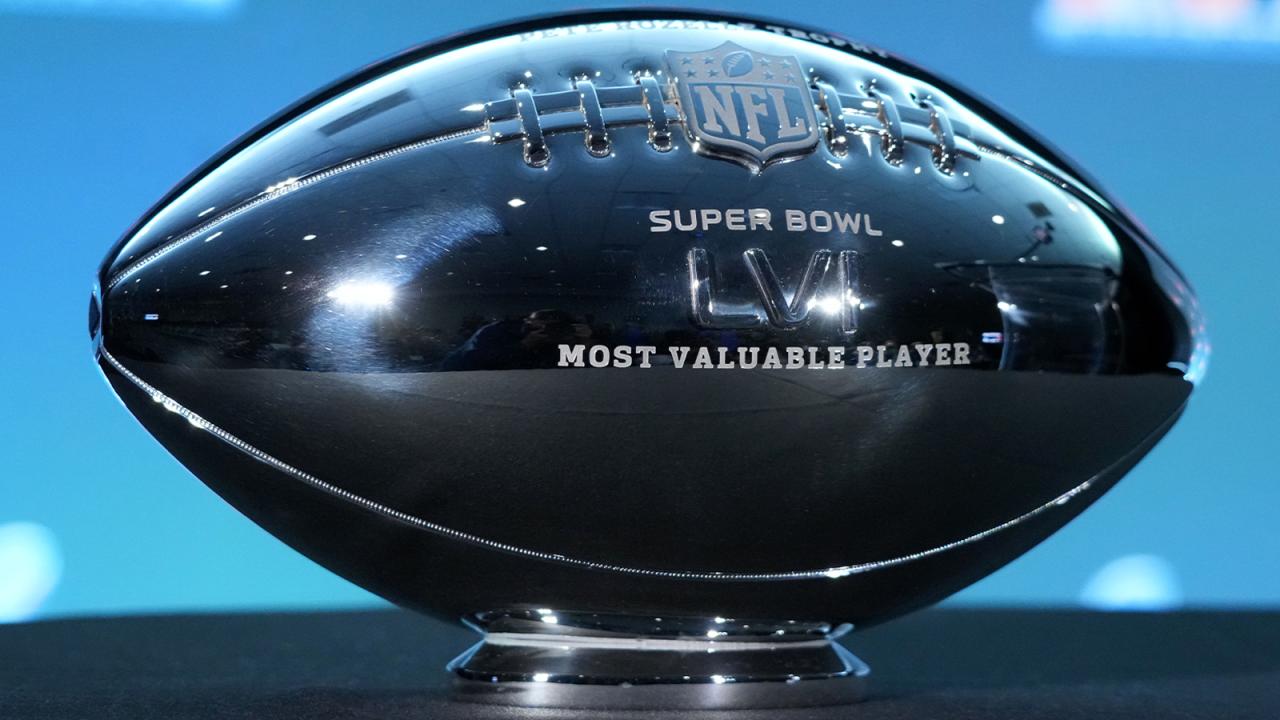
Super Bowl MVP Winners by Position
-
A. Quarterback (QB)
-
B. Running Back (RB)
-
C. Wide Receiver (WR)
-
D. Linebacker (LB)
-
E. Defensive End (DE)/Defensive Tackle (DT)
-
F. Cornerback (CB)/Safety (S)
-
G. Kick/Punt Returner (KR/PR)
The 2026 Super Bowl MVP award is one of the most significant in recent memory due to the rarity of the winning position. It underscores the cyclical nature of the NFL and proves that while the game evolves, the fundamentals of tough, physical football remain the bedrock of championship success. Kenneth Walker III’s name is now forever synonymous with greatness, not just for a night, but for a lifetime.