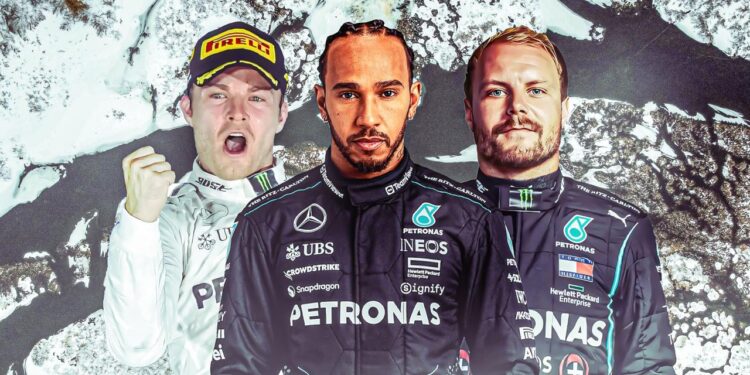
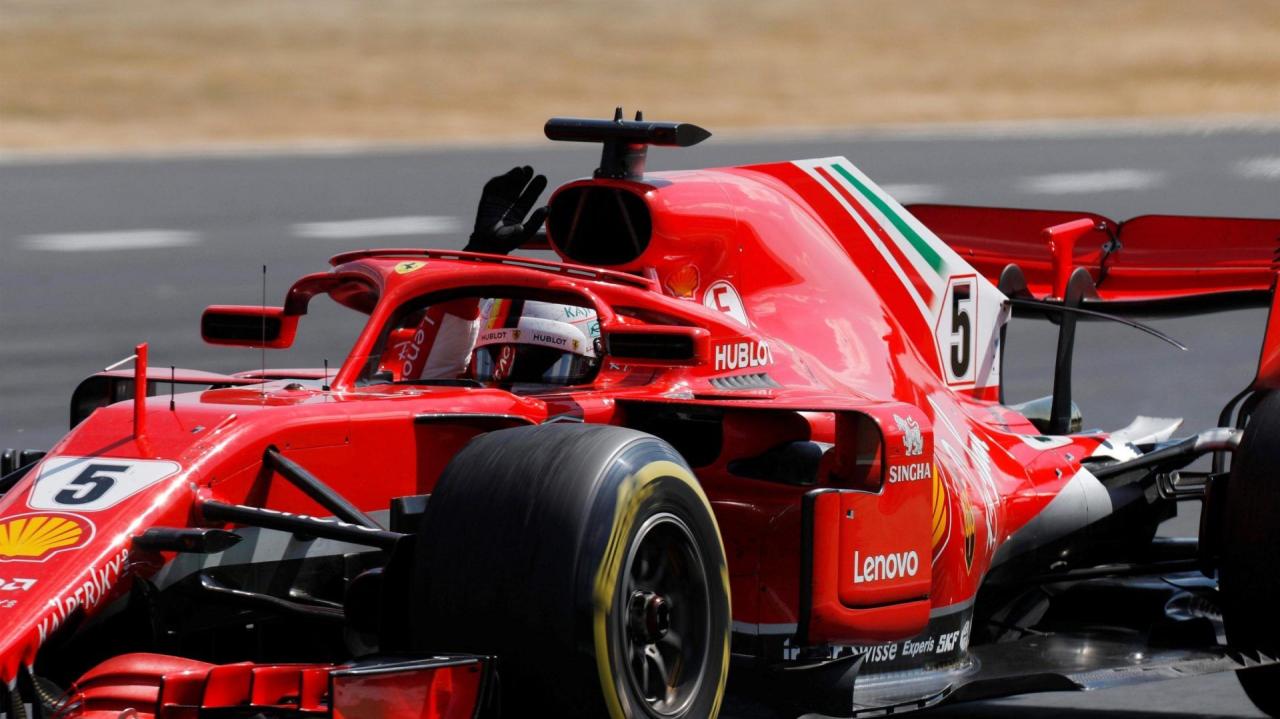
The 2026 British Grand Prix at Silverstone will be etched in the annals of Formula 1 history as a landmark event, not just for the spectacle it provided but for the significant milestone it represented for Scuderia Ferrari. Charles Leclerc delivered a masterclass in racecraft and composure to secure Ferrari’s 250th Formula 1 World Championship victory, a triumph that was both a testament to the team’s resilience and a pivotal moment in the 2026 season. This victory, achieved at the very circuit where Ferrari claimed its first-ever F1 win in 1951 with José Froilán González and the 375 F1, underscores a remarkable journey for the Prancing Horse . The race was a dramatic affair, filled with high-octane action, strategic gambles, and heartbreak, ultimately concluding in a somewhat anticlimactic finish behind the Safety Car, yet it was a result that sent shockwaves through the paddock and reinvigorated the championship battle .
The Start: A Ferrari Masterclass
The race’s foundation was laid in its opening seconds, where Ferrari executed a flawless start that would set the tone for the afternoon. From the second and third positions on the grid, both Leclerc and Lewis Hamilton launched brilliantly, immediately putting pressure on the pole-sitter, Mercedes’ Kimi Antonelli . The Ferrari duo capitalized on a superior launch, deploying their electrical energy more effectively in the second phase of the start to storm past Antonelli into the first corner. This early overtake was not just a flash of brilliance; it was a calculated move that demonstrated the SF-26’s improved traction and the drivers’ sheer determination. Hamilton, in his home race, was particularly aggressive, but his flying start, unfortunately, came at a cost as he was deemed to have jumped the start, earning a five-second penalty that would complicate his race significantly .
Despite the impending penalty, Hamilton’s immediate task was to act as a defensive bulwark for his teammate. He held up Antonelli for several crucial laps, allowing Leclerc to build a small yet vital lead at the front. This period of the race highlighted Ferrari’s strategic team play, with Hamilton sacrificing his own immediate position to ensure Leclerc could break away. The pressure on Antonelli was immense, and it was only on lap 11 that he managed to find a way past Hamilton, diving down the inside at the high-speed Copse corner to take second place . By this time, Leclerc had already established a comfortable gap, demonstrating a car that was not only quick over a single lap but also possessed excellent race pace on the medium tyres. The opening stint was a perfect example of Ferrari’s resurgence, turning their potential into a tangible race-winning advantage. However, the drama was only just beginning.
A Midfield Battle and Pit Stop Roulette
The middle portion of the race was a chaotic whirlwind of pit stops, penalties, and unforeseen technical issues, all of which reshuffled the order and kept the crowd of 175,000 on the edge of their seats . Hamilton’s penalty loomed over his race like a dark cloud. He pitted on lap 23 for hard tyres and served his five-second penalty, rejoining the race in sixth place, stuck behind a train of cars, including George Russell and Max Verstappen . This forced him into a series of fierce, wheel-to-wheel battles that showcased his legendary fighting spirit. He was embroiled in a tense, multi-lap duel with Verstappen, the two trading positions in a display of aggressive yet mostly clean racing. The fight was so intense that it also involved Russell, who was battling his own issues, including an early complaint of gearbox problems that later evolved into a slow right-rear puncture . This puncture was a disaster for Russell, forcing him to pit again and dropping him down the order, seemingly out of podium contention.
Meanwhile, at the front, Ferrari’s race strategy was unfolding according to plan. Leclerc pitted on lap 25, taking on hard tyres and rejoining in second place behind Antonelli, who had yet to make his first stop . Mercedes, in a bid to win the race, kept Antonelli out on his medium tyres for another ten laps, hoping the fresher rubber at the end of the race would give him a decisive advantage. This strategy was working perfectly. When Antonelli finally pitted on lap 35, he rejoined only a few seconds behind Leclerc, with a significant tyre advantage . For the next several laps, Antonelli was the fastest car on the track, relentlessly chipping away at Leclerc’s lead. The Italian’s charge seemed unstoppable, and it appeared that Ferrari’s hopes of victory were about to be snatched away by Mercedes’ superior straight-line speed and newer tyres. The tension was palpable as Antonelli closed the gap to under three seconds, setting the stage for what promised to be a thrilling finale . However, fate, as it so often does in Formula 1, had other plans.
Antonelli’s Misfortune and Leclerc’s Stroke of Luck
Just as Antonelli was on the cusp of overtaking Leclerc for the lead, a catastrophic technical failure struck his Mercedes. On lap 41, Antonelli radioed his team to report that “something broke” in his car after running over the kerbs at Copse . The issue was initially suspected to be front-wing damage, but Mercedes soon diagnosed a broken front-left wheel shield. The team attempted to rectify the problem by bringing him in for an unscheduled pit stop to change the front wing and remove the damaged shield, but the car’s handling remained severely compromised. Antonelli, in a courageous effort to salvage points for his championship campaign, wrestled his wounded W17 back onto the track, but his pace had vanished, and he tumbled down the order .
This sudden and dramatic reversal of fortune was Leclerc’s cue to breathe. The pressure was instantly relieved, and the Monegasque driver was now in complete control of the race. He managed his advantage carefully, knowing that the most significant threat had been neutralized. The victory, his first since the 2024 United States Grand Prix, seemed all but assured . This moment was a stark illustration of the fickle nature of Formula 1, where a potential race-winning performance can be undone in an instant by a mechanical failure. For Leclerc, it was a fortunate turn of events, but his victory was not handed to him; he had driven a flawless race, maintaining his position and pace under immense pressure. He had done everything that was required to put himself in a position to win, and when the opportunity came, he was ready to seize it.
The Late Safety Car and a Controversial Finish

As if the race had not delivered enough drama, the final laps saw the deployment of the Safety Car, which created a tense and chaotic conclusion. On lap 48, Max Verstappen, who was fighting for a podium position, crashed out spectacularly at the Stowe corner, spinning into the gravel and bringing out the Safety Car . This bunched up the field and immediately set off a strategic scramble in the pit lane. Ferrari, with one eye on a potential restart, made a decisive move by pitting both Leclerc and Hamilton for fresh soft tyres . Leclerc emerged from the pits still in the lead, but Hamilton, who had been running in second, rejoined in third place behind George Russell. Mercedes, in a contrasting strategic choice, had left Russell out on track, hoping to capitalize on his track position .
The decision to pit Hamilton proved to be costly. With Russell on older tyres but running ahead, Hamilton was poised to attack him on the restart for what would be a dramatic second-place finish. To the frustration of the 175,000-strong crowd, the FIA indicated that the Safety Car would be coming in for a final lap of racing . However, this message was later revealed to be a software error. The recovery of Verstappen’s Red Bull took longer than expected, meaning the race would finish behind the Safety Car . This anticlimactic finish sparked frustration and boos from the spectators, who had hoped for a one-lap sprint to the finish . Hamilton was left unable to challenge Russell for second place, a result that denied Ferrari a potential one-two finish. Despite the controversial end, Leclerc was a deserved winner, securing Ferrari’s historic 250th victory in the sport’s top tier .
Technical Analysis: How Ferrari Won at Silverstone
To understand Ferrari’s success at Silverstone, one must look beyond the sheer drama of the race itself and into the technical progress the team has made. The victory was the culmination of a concerted effort to address the car’s weaknesses, particularly in energy deployment and aerodynamic efficiency, which had been exposed on various circuits during the first half of the season .
A. Aerodynamic and Set-Up Advancements:
The SF-26, Ferrari’s 2026 challenger, had shown flashes of brilliance but was often hampered by high drag levels and struggles with tyre management. For Silverstone, a track that is notoriously power-sensitive with its high-speed corners and long straights, the team knew they needed a specific solution . The engineers at Maranello developed a new aerodynamic package that included a simpler, more efficient floor fence, which helped to better manage the turbulent air coming off the front wheels, reducing drag. Furthermore, they used a more closed engine cover, which was better suited to the cooler British temperatures, helping to streamline the car’s rear end and further reduce drag . These changes were tested in Austria and implemented at Silverstone, and they made an immediate impact. The drivers reported a much more stable and predictable car from the very first free practice session .
B. Energy Deployment and Qualifying Performance:
The changes to the car were most evident in its improved energy deployment. Under the new 2026 regulations, which rely heavily on electrical energy, managing the power unit’s energy deployment is critical for both qualifying and race pace. Ferrari’s performance in qualifying had been a rollercoaster throughout the season. Data analysis reveals a clear trend of improvement. In Australia, they were over a second off pole, but by Barcelona, they had reduced that deficit to just 0.086% . At Silverstone, Leclerc qualified second, just 0.199% behind Antonelli, confirming the car’s single-lap pace . This improvement is attributed to better energy management through the lap, especially in the third sector of the track, where Silverstone places enormous demands on the electrical systems . The ability to use this energy more effectively allowed Leclerc to maintain competitive lap times and, crucially, deploy it at the start to take the lead.
The Championship Impact and Team’s Resurgence
The victory at Silverstone had immediate and profound implications for the Formula 1 World Championship. Kimi Antonelli’s non-score, due to his mechanical issues and subsequent penalty, saw his championship lead drastically cut from 66 points at the peak of his dominance to just 25 points over his teammate George Russell . This opened up the championship fight significantly, bringing Lewis Hamilton, now in third place, into the reckoning.
A. Ferrari’s Season: A Tale of Two Halves:
Ferrari’s 2026 season, as described by Team Principal Fred Vasseur, has been a classic tale of two halves . The first part of the season was dominated by Mercedes, who had a significant points advantage. However, since the Spanish Grand Prix, Ferrari has turned the tables. Vasseur noted, “The first part of the season was probably in two stages. The first one is until Spain when Mercedes was flying, they scored something like 100 points more than us in four or five events. And after Spain, when we came back, we scored more points than Mercedes in these four or five races.” This shift in momentum is not just a flash in the pan; it is a direct result of the team’s relentless development program . Ferrari has been bringing smaller, incremental updates to almost every race, compared to other teams’ more significant, “big package” upgrades. This consistent progress has allowed them to close the gap to Mercedes and establish themselves as a consistent front-running threat .
B. Driver Perspectives and Future Outlook:
For Leclerc, the victory was a personal triumph, a much-needed confidence boost after several challenging weekends where he struggled to find the feeling he needed in the car . He said, “I’m really proud of the work we have done as a team to get back on the top step of the podium. Coming to Silverstone, we didn’t expect to be this competitive. We were much faster and closer to our competitors than we thought.” His breakthrough came after some set-up changes between the sprint and the main qualifying session, allowing him to regain the confidence that had been missing . Hamilton, despite his penalty and the contentious Safety Car finish, praised the team’s effort and remained optimistic about the future. He stated, “It has been an amazing first half, given we’ve been probably three or four tenths down on the straights based on power for the first half of the season. I know the guys are pushing hard to bring upgrades for that… I think the second half will be stronger.”
The Narrative of Progress: Leclerc’s Emotional Return to Victory Lane
Beyond the statistics and technical analysis, Leclerc’s victory at Silverstone was a deeply emotional and symbolic moment. It marked his first win since the 2024 United States Grand Prix, ending a long drought that had tested his resilience and mental fortitude. His performance in the British Grand Prix showcased the grit and talent that have made him one of the sport’s most admired drivers. The Monegasque driver had been through a rough patch, struggling with the car’s handling and feeling a disconnect between his driving style and the SF-26’s characteristics. The set-up changes made between Saturday morning and qualifying transformed his weekend. He explained, “I got back the feeling I had been missing. This was confirmed in the race today and it just feels really good to take this win home for the team, after a tough few weekends.” This victory was not just about winning a race; it was about proving to himself and to his critics that he remains one of the best in the world. The win was a testament to the hard work and dedication of the entire Ferrari team, both at the track and back in Maranello, Italy. As Team Principal Fred Vasseur noted, the victory was a reward for the progress they have made, and a signal that they are on the right trajectory. The focus now shifts to the Belgian Grand Prix at Spa-Francorchamps, where Ferrari will be looking to build on this momentum and potentially challenge Mercedes again .
Ferrari’s Winning List: A Historic Milestone
The Silverstone victory was particularly significant as it was Ferrari’s 250th win, a milestone that underscores their enduring legacy in Formula 1. Since their first victory in 1951 with José Froilán González at the very same circuit, Ferrari has become the most successful and recognizable team in F1 history . The victory places them in an elite category, further cementing their record as the team with the most wins in the sport’s history. Leclerc’s triumph also moved him into a tie for eighth place on Ferrari’s all-time winners’ list with Rubens Barrichello, with his ninth win for the team . This historic achievement was a central theme of the weekend, providing a sense of occasion and grandeur to the victory. The British Grand Prix is a classic event, the birthplace of the Formula 1 World Championship, and for Ferrari to have won their first and their 250th at the same circuit is a poetic symmetry that highlights the deep connection between the sport’s most iconic team and its most historic race. The 250th win is not just a number; it is a story of passion, engineering, and a relentless pursuit of excellence that has defined Ferrari for over 75 years.
Conclusion
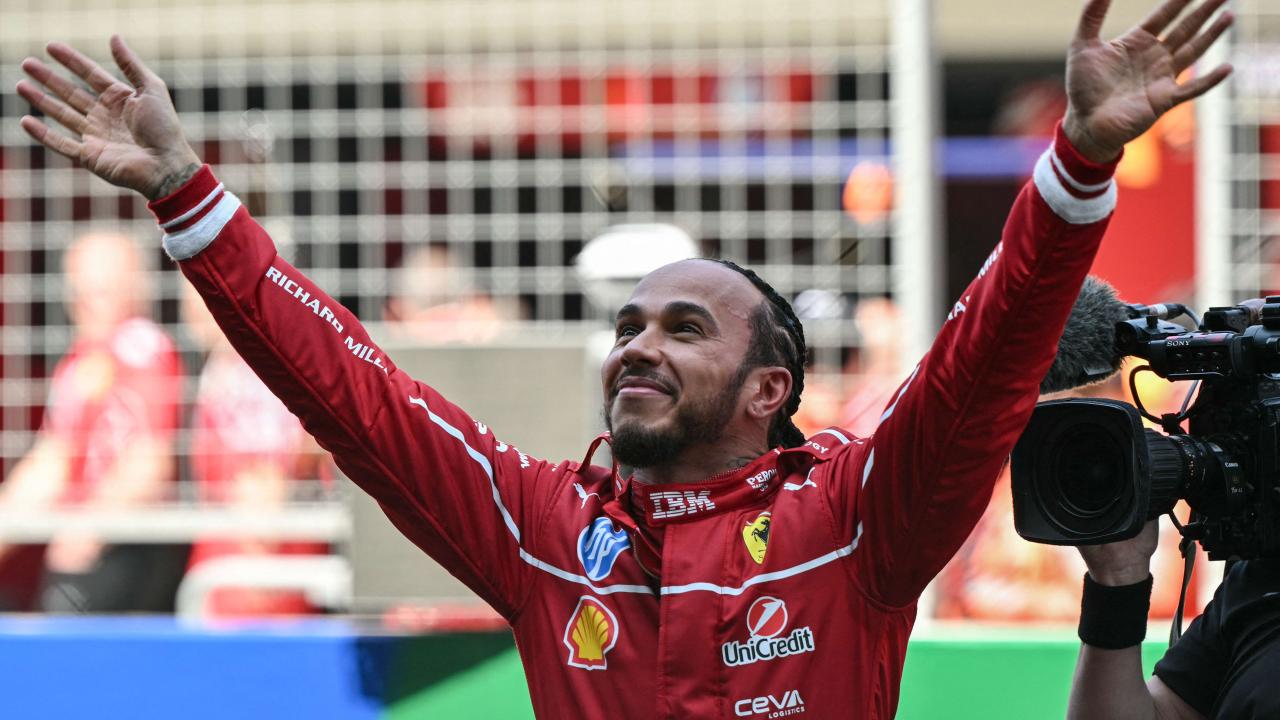
The 2026 British Grand Prix at Silverstone was a race that had it all: a brilliant start, fierce wheel-to-wheel battles, strategic brilliance, technical failures, and a controversial finish. At its heart, however, was a story of Ferrari’s resurgence. Charles Leclerc’s victory was a masterclass in managing a race under immense pressure, a performance that finally delivered on the potential the SF-26 had shown throughout the season. It was a victory built on a combination of flawless driving, strategic acumen, and a concerted technical effort to overcome the car’s weaknesses. The win not only gave Ferrari its historic 250th victory but also breathed new life into the championship, cutting Kimi Antonelli’s lead and setting up what promises to be an exciting second half of the season. For Lewis Hamilton, despite the penalty and the lost opportunity for a one-two, the result was a positive step, finishing on the podium in his home race and contributing to Ferrari’s points haul in the Constructors’ Championship. As the F1 circus heads to Spa-Francorchamps, Ferrari carries with it the momentum and belief that they can truly challenge for the world title. The victory at Silverstone was a statement of intent, a declaration that the Prancing Horse is back at the front and ready to fight for the highest honors in motorsport.