
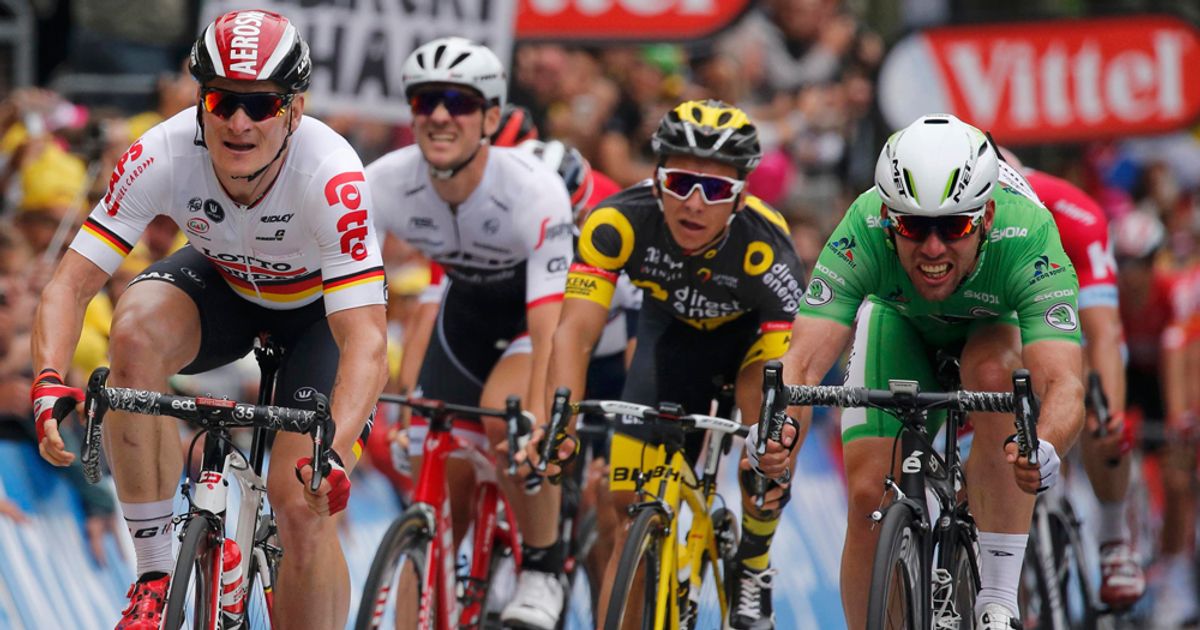
The Tour de France remains the pinnacle of professional cycling, a three-week spectacle that captures the imagination of sports fans worldwide. The 2026 edition delivered yet another masterclass in athletic drama, with a thrilling finish that will be remembered for years to come. While the race’s overall narrative often centers on the battle for the yellow jersey and the legendary climbs of the Alps and Pyrenees, the final stages and the captivating sprints provide a unique form of excitement that is hard to match . This article delves into the heart of what makes a Tour de France finish so electrifying, from record-breaking speeds and tactical masterstrokes to the technological innovations that are reshaping the sport.
The modern Tour de France is a complex tapestry of individual brilliance, team strategy, and technological prowess. The race’s final stages often see a shift in dynamics as the general classification (GC) contenders, having secured their positions in the mountains, adopt a more cautious approach, allowing the sprinters to take center stage . However, the 2026 Tour proved that even on the flattest of days, the race is never predictable. The combination of a new points system designed to incentivize sprinters, the emergence of unexpected stage winners, and the use of cutting-edge equipment created a finish that was as thrilling as it was historic.
A New Era of Sprinting
The 2026 Tour de France introduced significant rule changes that directly impacted the race’s finish. For the first time since 2019, the race began with a team time trial, but with a new format where each rider’s individual time counted for the general classification . This change, implemented by race organizer Amaury Sport Organisation (ASO), was designed to prevent a single team from dominating the early GC standings and to add a layer of tactical complexity to the opening stage . The result was a spectacular display of teamwork and individual power, with Visma-Lease a Bike claiming victory on the slopes of Montjuic in Barcelona, setting the stage for the battles to come .
Perhaps more impactful for the race’s thrilling finishes was the overhaul of the green jersey points classification . In a bid to ensure that the competition for the sprinter’s jersey remained a genuine contest among the world’s fastest men, ASO increased the points on offer . On the five designated “sprint” stages, the winner’s points were boosted to 70, up from the usual 50, while the intermediate sprint points also saw a bump from 20 to 25 . This strategic move was a direct response to concerns that riders like Tadej Pogačar, the four-time champion known for his all-around dominance, could inadvertently win the green jersey, a feat last accomplished by the legendary Eddy Merckx in 1969 . The new rules aimed to ensure that the green jersey would once again be the exclusive domain of the peloton’s sprinting elite, thereby intensifying the battles on flat stages and making every intermediate sprint and finish line a high-stakes affair .
The changes worked, creating a season of intense sprinting competition. The sprint stages, particularly those with the enhanced points, saw teams chasing breakaways more aggressively, resulting in faster and more exciting racing. This was evident on stages 11 and 12, which were key sprint stages where the race’s fastest riders were forced to fight for every point. The result was a series of thrilling sprints that kept fans on the edge of their seats.
The Fastest Stage in Tour History
The climax of the sprinting action arguably came on Stage 11, a flat 161.3km route from Vichy to Nevers, which made history as the fastest stage ever recorded in the Tour de France . The peloton completed the stage at an astonishing average speed of 50.9 kilometers per hour, beating the previous record of 50.3kph set in 1999 . This phenomenal pace was a testament to the strength of the modern peloton, the pursuit of the new points system, and the favorable wind conditions on the day .
The stage, which was expected to end in a bunch sprint, unfolded with a dramatic surprise. As the peloton rolled into the final 500 meters, the anticipated sprint trains began to jostle for position. However, Søren Wærenskjold, a 26-year-old Norwegian rider for the Uno-X Mobility team, seized the moment. While the main sprint favorites hesitated, Wærenskjold launched a counter-attack from 400 meters out, sneaking through a gap beside the barriers . He charged past the early leader Cees Bol and held off the fast-closing Olav Kooij to win his first-ever Tour de France stage by almost a bike’s length .
Wærenskjold’s victory was a fairy-tale moment. His team, Uno-X, was already experiencing a dream Tour, with a teammate having worn the yellow jersey for two days . The win was even more remarkable given that Wærenskjold had been the last rider to finish the previous day’s mountain stage after suffering a nasty crash on Bastille Day . “It’s surreal, it’s unbelievable,” he said after the victory. “It means everything, it’s my biggest win so far” . The Stage 11 finish was a perfect illustration of how the sport’s unpredictability, combined with the new sprint incentives, can create moments of pure sporting magic.
The Anatomy of a Tour de France Sprint
To truly appreciate the thrill of a Tour de France finish, one must understand the complex strategies at play. A successful sprint is rarely a solo effort; it is the culmination of meticulous planning and execution by a team. The “sprint train” is a well-oiled machine designed to position their designated sprinter for the final dash. As the race nears its conclusion, teams will “lead out” their sprinter, with teammates pacing the peloton at an ever-increasing speed to deter attacks and keep their leader in a prime position.
However, a successful sprint is not just about raw power; it’s also about timing and positioning. The decisive final 200 meters are a chaotic mix of bikes, bodies, and sheer speed. In the maelstrom, a sprinter must find a clear lane to launch their final effort. As demonstrated by Wærenskjold on Stage 11, sometimes the best strategy is to wait for the major sprint teams to hesitate before attacking . His long-range sprint caught the favorites off guard, proving that boldness and a perfect sense of timing can often overcome pure speed .
Mastering the Breakaway
While bunch sprints are a spectacle, the Tour de France also provides thrilling finishes from breakaways. A successful breakaway is one of the most difficult feats in cycling. A small group of riders must stay ahead of a fast-chasing peloton for dozens or even hundreds of kilometers. As a detailed analysis from Tour-Magazin explains, the success of a breakaway relies on a combination of factors .
A. Team Composition: A breakaway of strong riders who can work effectively together, providing each other with a slipstream, can make a chase difficult for the peloton. The more teams that have a rider in the breakaway, the fewer teams are committed to chasing behind .
B. Tactical Pacing: Breakaway riders must pace themselves intelligently. If they build too big a lead too early, the peloton will be motivated to chase them down. A smarter tactic, as outlined in the tech briefing, is to ride at a controlled pace at the start, lulling the peloton into a false sense of security before increasing the tempo in the final stages .
C. Equipment Advantage: Modern aerodynamic road bikes, wheels, and tires are crucial for a successful breakaway. A long breakaway is essentially a long time trial, and the equipment that reduces wind resistance and rolling resistance can provide a significant advantage .
The Tech Behind the Finish Line
The margin between victory and defeat in a Tour de France sprint is often measured in centimeters and milliseconds. The technology the riders use has become a key factor in determining these marginal gains. Cutting-edge equipment can mean the difference between a spot on the podium and an also-ran finish. One of the most significant areas of innovation is in wheel aerodynamics.
According to wind tunnel tests and simulations conducted by Tour-Magazin, the aerodynamics of wheels are paramount to a successful finish. For wheels with similar aerodynamic performance, weight becomes the deciding factor . The simulation models, which use data from real-world tests and realistic power outputs, show that even small differences in aerodynamic drag can have a measurable impact on performance. For example, a simulation of a four-rider breakaway estimated that they could maintain an average speed of 47 km/h with optimal equipment, exceeding the official pace table’s fastest estimate of 46 km/h .
Perhaps surprisingly, even the choice of tires can be a decisive factor in a sprint . The theory of “marginal gains,” popularized by Team Ineos, emphasizes that many small improvements can add up to a significant advantage. In the context of a sprint, tire choice is a prime example. Time trial (TT) tires have lower rolling resistance than standard all-round tires. At the high speeds of a sprint finish, a switch to TT tires can save precious watts, translating to a crucial lead of several centimeters at the line .
For example, a simulation showed that a Conti GP 5000 TT tire provides a 3.2-watt advantage over the standard GP 5000 at sprint speed, resulting in an 11-centimeter lead at the finish . In the world of professional cycling, where races are won by the width of a tire, this is a massive advantage. This focus on detail extends to bike frames themselves. A highly aerodynamic bike like the Van Rysel RCR-F Pro, which was ridden by Olav Kooij to victory on stage five, was identified in simulations as having a decisive edge over other models . The adoption of such technology has contributed to the ever-increasing speeds seen in the modern Tour.
The Legends and Legacy of the Tour
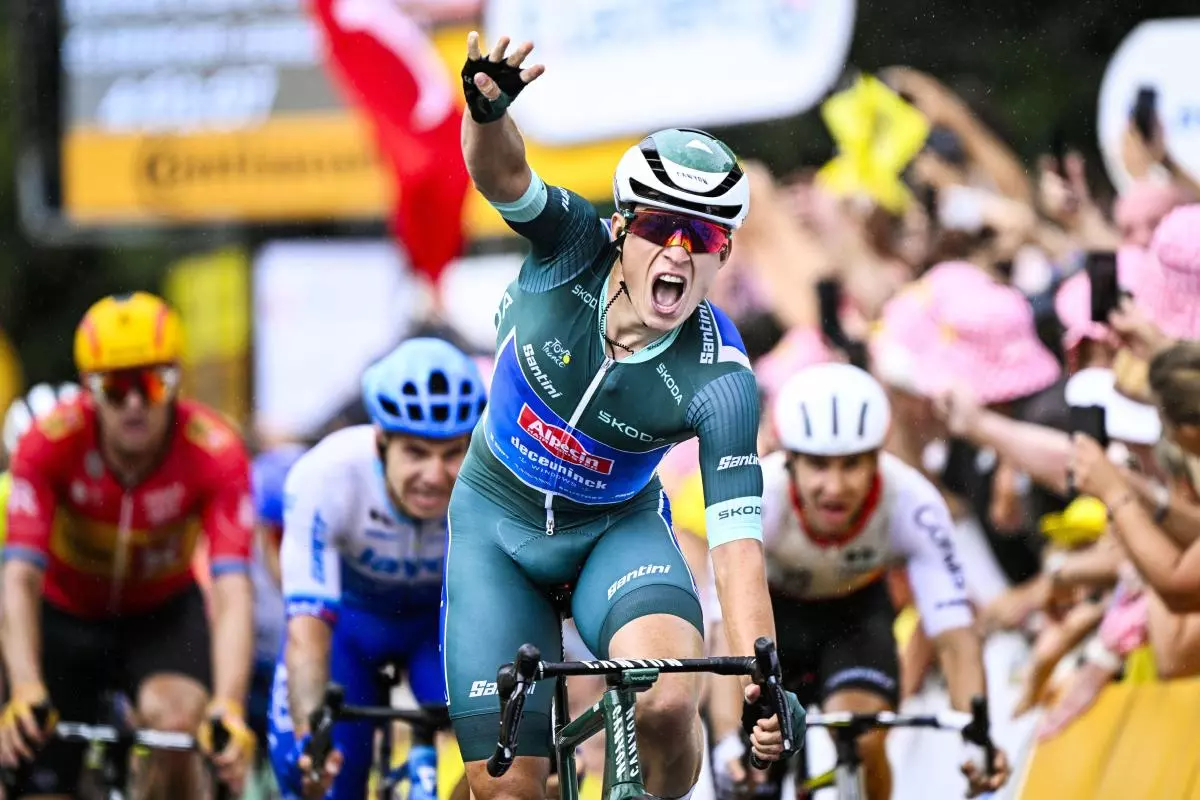
The modern thrilling finishes of the Tour de France are built upon the race’s rich and often brutal history. Since its inception in 1903, the Tour has been a crucible for champions and a stage for legendary feats . The race’s history is filled with epic battles and record-setting performances. Eddy Merckx’s unparalleled clean sweep of the yellow, green, and polka-dot jerseys in 1969 remains one of the greatest individual achievements in the history of sport . Tadej Pogačar, with his five Tour victories, has entered this pantheon of greats, joining Jacques Anquetil, Bernard Hinault, and Miguel Indurain .
The race has also been defined by its iconic stages and moments of incredible drama. The introduction of mountain stages in the Pyrenees in 1910 forever changed the nature of the Tour, creating the enduring myth of the climber . The legendary Alpe d’Huez, with its 21 hairpin bends, has been the scene of countless epic duels and record-breaking climbs, including Pogačar’s devastating stage win in 2026 . Other moments, such as Greg LeMond’s dramatic come-from-behind victory in the final-stage time trial in 1989, or the heartbreaking tragedies that have struck the race, have etched themselves into the public consciousness .
The race’s history is also a story of technological evolution. From the rudimentary bikes of the early 20th century to the advanced carbon fiber frames and electronic shifting of today, technology has always played a key role in the Tour. The introduction of derailleurs, aluminum wheels, and the standardization of bike weight are all milestones that have shaped the race’s history . This constant push for innovation continues today, with teams scrutinizing every detail, from the choice of tires to the shape of their handlebars, in the pursuit of those all-important marginal gains .
The Story of the 2026 Tour in Numbers and Moments
The 2026 Tour was a race defined by its dramatic swings and historic performances. Tadej Pogačar once again proved his dominance, but the battle for the yellow jersey was far from a foregone conclusion. Early on, his rivalry with Jonas Vingegaard, a two-time champion, was reignited. Vingegaard’s Visma-Lease a Bike team won the opening time trial, putting him in the yellow jersey . Pogačar, however, struck back immediately, gifting the stage win on stage two to his teammate Isaac del Toro and taking six bonus seconds in the process . This act of selflessness, as Del Toro described it, was a sign of the immense team spirit within the UAE Team Emirates-XRG squad .
A Battle in the Pyrenees
The race’s decisive moment came on the iconic Col du Tourmalet during stage six, the first major mountain stage of the race . In a display of devastating power, Pogačar launched his attack near the summit, dropping Vingegaard and his other rivals . He gained a massive 2 minutes and 38 seconds over Vingegaard, taking the yellow jersey, which he would not relinquish . The stage was also marred by the crash of Torstein Træen, the popular Uno-X rider who had heroically worn the yellow jersey for two days. He was forced to withdraw from the race with a concussion and multiple rib fractures, ending his fairy-tale run .
While Pogačar and Vingegaard were the main protagonists for the GC, the race was full of other compelling narratives. Debutant Isaac del Toro’s early stage win was a breakout moment, showcasing the next generation of climbing talent . The sprint competition, invigorated by the new points system, saw multiple riders enjoy success. Tim Merlier won three stages, proving his speed and consistency . Olav Kooij, Wærenskjold, and Mathieu van der Poel also claimed stage victories, highlighting the incredible depth of talent in the peloton . Van der Poel’s victory on the final stage in Paris was a fitting end to the race, a beautiful attack on the Champs-Élysées that showcased the race’s unique blend of endurance, tactics, and raw power .
A Glimpse into the Future
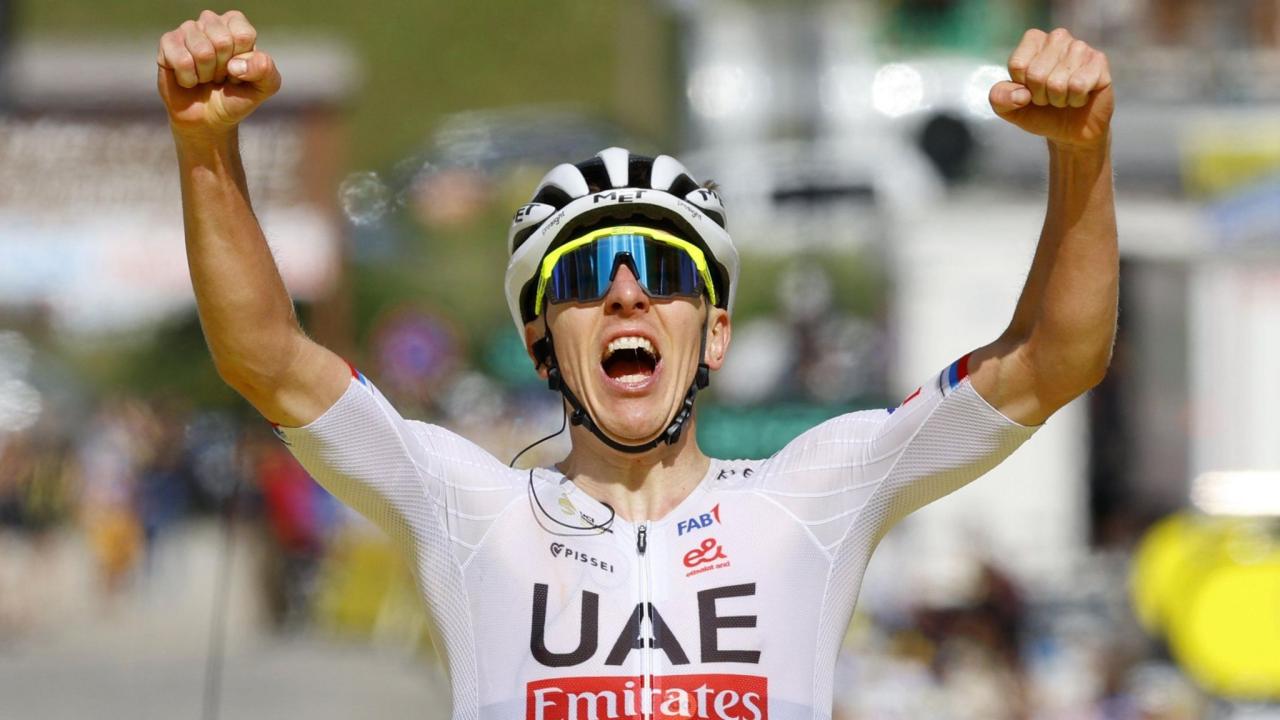
The 2026 Tour de France was a resounding success, delivering drama, excitement, and controversy in equal measure. It was a race where the oldest traditions of the sport met the latest technological innovations. The thrilling finishes, from the record-breaking sprint speed to the daring tactical attacks, were a testament to the enduring appeal of the Tour.
The future of the race promises even more excitement. The rule changes implemented in 2026 have already proven effective in intensifying competition, and it is likely that organizers will continue to tweak the format to keep the race fresh and unpredictable. As equipment continues to evolve, riders will be able to push the boundaries of human performance even further. The 2026 Tour de France will be remembered as an extraordinary edition of the world’s greatest bike race, a thrilling three-week spectacle that had it all: breakneck speed, tactical genius, and moments of pure sporting magic. It reminded us that in the Tour de France, the finish line is never just the end of a stage; it is often the beginning of a legend.
The 2026 race, in all its glory, served as a powerful reminder of why the Tour de France remains the ultimate test of a cyclist. It was a celebration of individual brilliance, team strategy, and the relentless pursuit of victory, all played out on the stunning backdrop of the French landscape. From the flat sprints of Nevers to the legendary climbs of the Alpe d’Huez, the race provided moments that will be replayed and discussed for years to come.
Ultimately, the thrilling finish of the Tour de France is not just about the final kilometer of a single stage. It is about the cumulative drama of 21 days of racing, the stories of triumph and tragedy, and the deep history that continues to make the race the pinnacle of the sport. The 2026 Tour successfully added a new chapter to this rich history, one filled with record-breaking speeds, unexpected heroes, and a glimpse into a future where the line between victory and defeat is thinner than ever. The race’s legacy is secure, and its future is brighter than ever. The thrilling finish is simply the final, dramatic punctuation mark on a story that captivates the world every July.